
A role model is a person you look up to and admire. They can be someone who has achieved great things, or someone who is just good at living their life in a way that you aspire to.
Building the Ideal Player/Becoming a Role Model
Hate to miss a great Merch idea with our own “Role Model In Training” t-shirts:
A role model is a person you look up to and admire. They can be someone who has achieved great things, or someone who is just good at living their life in a way that you aspire to. Most importantly, Role Models provide a template for success and can help people set and achieve ambitious goals, often modelling the type of behavior required to reach their goal.
Roger Federer’s greatest impact as a tennis player has not been his amazing on-court achievements but his influence over an entire generation of tennis professionals, by setting the standard for how a player should carry themselves on and off the court, balancing his role as a competitor and an ambassador for tennis worldwide.
A role model is a person you look up to and admire. They can be someone who has achieved great things, or someone who is just good at living their life in a way that you aspire to. Most importantly, Role Models provide a template for success and can help people set and achieve ambitious goals, often modelling the type of behavior required to reach their goal.
There are no right or wrong answers here. We are simply trying to establish a baseline score from which to work from.
A Role Model can be like having a supercharged conscience. In my 12 Step Recovery World, we choose our sponsors by seeking out somebody who appears to have something we want: serenity, poise in public, grace in sharing, or quality sobriety. If choosing a Role Model in tennis, we would seek similar parameters in the people we look up to.
They provide the template for what a healthy lifestyle looks like
They are steadfast and passionate about what they do, showing the benefits of commitment and work ethic
We don’t usually give this much thought, but role models give us our most important life lessons, with their actions profoundly influencing us.
Think back, and you’ll likely remember a time – good or bad – when you’ve imitated someone you look up to, be it a sports star or similar.
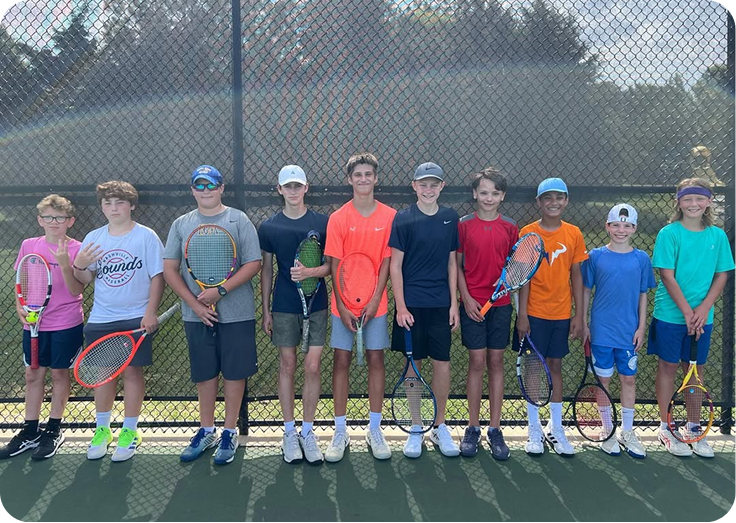
Role models are most impressionable on children and young people, which is why they’re so important.
Positive role models influence our actions, often through imitation, and motivate us to strive for the standards they have set.
It’s for this reason that role models are important. A good role model can sometimes influence a child or young person even more so than parents can.
I have written extensively about my role models in tennis, from my imitation of Jimmy Connors, my fascination with all things Borg, my slow evolution to finally admiring John McEnroe, up through the present careers of Agassi, Graf, Serena, and Djokovic.
The nice thing about role models is that there are no rules. There are no lifetime contracts. You can love em and leave em, or you can give them time-outs. There’s an unwritten pact with choosing a Role Model; you have my undying support until you don’t.
I was a huge Djokovic fan until all the in-match shenanigans. I no longer wanted to be associated with someone who conducted themselves with such gamesmanship. Tennis has a losing code. The players I admire the most are not for how they play but for how they lose. There’s nothing harder in sport than losing with grace. A hug at the net doesn’t wipe the slate clean. Tennis has a Losing Code. Violate it, and you lose my support.
More in this space to come…
You, too, can be a role model/mentor. That is what the FBTL Teaching Academy is about. We showcase the 50 or so qualities that the strongest and healthiest among us possess, educate ourselves about them, incorporate them into our lives, and become role models ourselves in the process. In my most ambitious models of this program, complete all 50 topics and become a FBTL Mentor yourself to future tennis competitors applying this program.
Becoming a better role model in tennis, or any sport, involves a combination of on-court performance and off-court behavior. Here are 10 action steps to help a tennis player become a better role model:
Display respect for opponents, officials, and spectators. Win and lose graciously, and avoid negative behavior such as arguing with umpires or opponents.
Engaging in a morning routine helps clear the mind and sharpen focus. It allows time for setting daily goals and priorities, leading to a more organized and purposeful approach to tasks and challenges.
A well-planned morning routine can increase productivity. Starting the day with purposeful activities often helps individuals accomplish more with a clearer mind and energy.
Morning rituals encourage the development of positive habits. Whether exercise, meditation, or planning, these habits can contribute to personal and professional growth.
Many morning rituals include exercise, meditation, or a healthy breakfast, which can improve physical and mental health. This improvement in overall well-being is a critical factor in long-term success.
Regular morning routines can help build resilience. By starting the day in a calm, controlled manner, individuals are better prepared to handle stress and unexpected challenges.
For many, the quiet of the morning is a time for creative thinking and problem-solving. Without the distractions of the day, the mind can explore ideas more freely.
Morning rituals can set a positive tone for the day. Engaging in activities that promote a sense of accomplishment and well-being early in the day can boost confidence and optimism.
Morning time can be used for self-reflection, allowing individuals to assess their goals, progress, and areas for improvement, which is essential for personal development and success.
Tailoring a morning routine to individual needs and goals becomes a personal success ritual, reinforcing the connection between daily habits and overall achievement.
By embodying these qualities, a tennis player can serve as a positive influence on and off the court, contributing to the development and promotion of the sport and inspiring others to follow suit.
A role model is someone whom you admire and look up to. They can be a celebrity, a friend, a family member, or even someone you don’t know. Having a role model is important because they can provide motivation, inspiration, and support.
When choosing a role model, picking someone who aligns with your values and beliefs is important. This way, you can be sure you’re looking up to someone with the same principles as you do. It’s also important to choose someone successful in the area that you want to be successful in. For example, if you want to be a successful writer, find a role model who is a published author.
Role Models are a must for self-improvement, development and growth because we must have a standard to strive for or compare ourselves with. A role model is someone others look to as a good example. Someone who is worthy of imitation.
Here are some reasons why its important to have a role model(s).
I think it's important for little girls growing up, and young women, to have one in every walk of life. So from that point of view, I'm proud to be a role model!
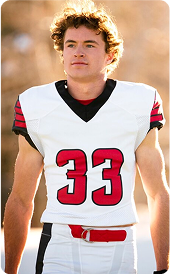
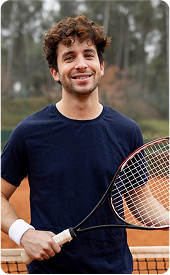
It's great to be somewhat of a role model. I want to be a positive and good role model and lead by example and try to do the best I can. Playing good golf definitely draws attention, but I want to have a good attitude on the course and do the right things.
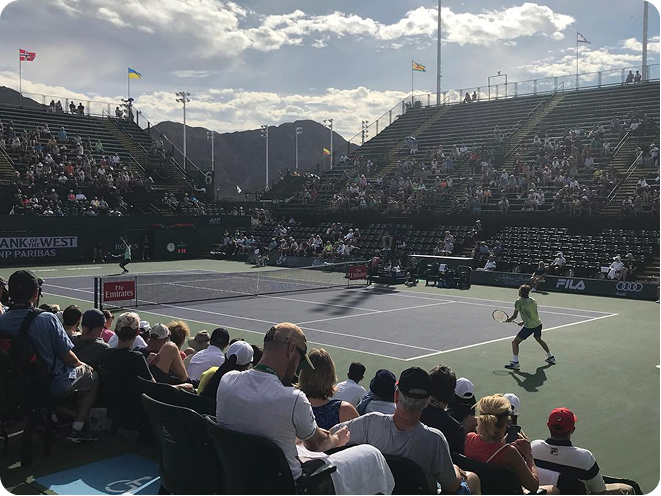
I was a huge Djokovic fan until all the in-match shenanigans. I no longer wanted to be associated with someone who conducted themselves with such gamesmanship. Tennis has a losing code. The players I admire the most are not for how they play but for how they lose. There’s nothing harder in sport than losing with grace. A hug at the net doesn’t wipe the slate clean. Tennis has a Losing Code. Violate it, and you lose my support.
And that applied to the parents too, for they all had their coping skills. The pacer, the panther, the talker, the stalker, the chart keeper, the cheerleader. To watch your flesh and blood compete at tennis, where nothing was given, everything earned, knowing once they walked on that court, there was nothing you could do to affect the outcome. Not to say some didn’t try. Parents would cheat. They gave signals. A smile meant approach. A touch of the hat meant move the feet. Not exactly the carrying-ons of a third base coach, but if you watched closely enough, the codes were not hard to break.
Why all the tension, you might ask? As stated, the rankings didn’t lie. To win one of these events vaulted a player into the Nationals conversation. Once there, you’re among the best in the nation. And being the best in the USA in the mid-1970s meant you were among the best in the world. And though the pathway to professional tennis was a long shot for even the most successful and talented juniors, you were in tournaments with future champions and world number ones. And though it bordered on delusional to start preparing for a professional career at such a young age, to come of age with professional-level skill and athleticism and not be prepared to make the jump would have been downright criminally irresponsible.
And that applied to the parents too, for they all had their coping skills. The pacer, the panther, the talker, the stalker, the chart keeper, the cheerleader. To watch your flesh and blood compete at tennis, where nothing was given, everything earned, knowing once they walked on that court, there was nothing you could do to affect the outcome. Not to say some didn’t try. Parents would cheat. They gave signals. A smile meant approach. A touch of the hat meant move the feet. Not exactly the carrying-ons of a third base coach, but if you watched closely enough, the codes were not hard to break.
Why all the tension, you might ask? As stated, the rankings didn’t lie. To win one of these events vaulted a player into the Nationals conversation. Once there, you’re among the best in the nation. And being the best in the USA in the mid-1970s meant you were among the best in the world. And though the pathway to professional tennis was a long shot for even the most successful and talented juniors, you were in tournaments with future champions and world number ones. And though it bordered on delusional to start preparing for a professional career at such a young age, to come of age with professional-level skill and athleticism and not be prepared to make the jump would have been downright criminally irresponsible.