
Welcome to the FBTL Testing Section.
How do we chart progress in anything? We test. But unlike school, where we test for right or wrong answers, our testing at FBTL is strictly to measure. It would be nice if Ancestry DNA or 23andMe could measure your stress reactivity, frustration tolerance, resiliency, work ethic, or all the traits that the healthiest and most successful tennis competitors possess. But our FBTL Test can and does. That said, all of the traits being tested here are traits you already possess to some degree, yet tennis has made the mistake of leaving too much of its development to chance throughout the years. Through my research, I have found that those proficient in these areas will have a competitive advantage over those deficient.
Huh? Parents and Coaches???
Absolutely! Just as an overbearing tennis parent or coach can be detrimental to development, a strong parent/coach support system is a vastly underrated asset for the aspiring player.
For anyone who has followed my writing over the past 15 years, the role of parents/coaches in player development has been one of my most frequently discussed topics. I plan to use this site to bring you copious content on how to best navigate this most challenging of dynamics. I plan to present it here in The Player’s Box, a metaphor for the support system all developing players need along their journeys. Briefly…

Parents as Pillars: Building the Emotional Backbone of a Player
The Player’s Box: The Essential Roles of Parents and Coaches in a Competitive Tennis Player’s Journey 🎾🏆
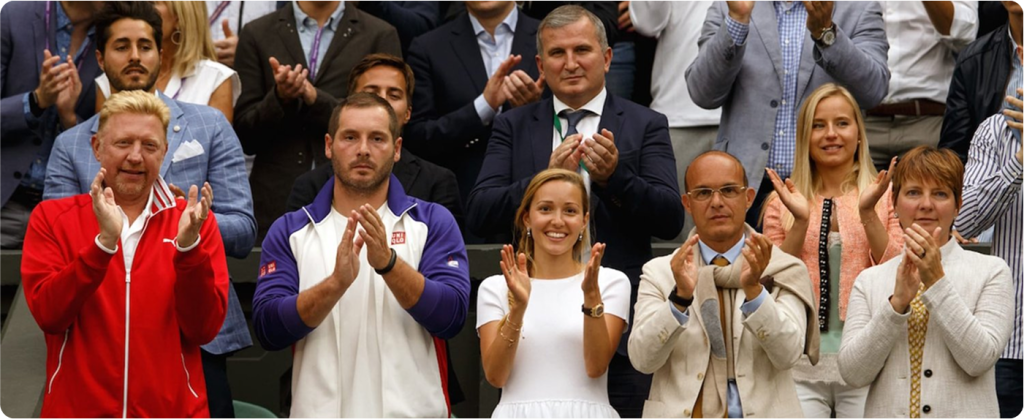
In professional tennis, the Player’s Box is a powerful symbol—filled with parents, coaches, trainers, and mentors, it represents the support system that fuels a player’s success. Behind every great competitor is a team that nurtures, guides, and strengthens them both on and off the court.
For an aspiring competitive tennis player, parents and coaches play distinct but equally vital roles in their development. While a coach refines their skills, a parent provides emotional and logistical support. When both roles are in sync, a player thrives.
The Role of Parents: The Foundation of Support 👨👩👧👦
Parents are often the first and most consistent source of encouragement for a young athlete. Their role is not to be the coach or strategist but to provide unwavering support, perspective, and balance in their child’s journey.
The Foundation of Support
Emotional Anchor & Confidence Builder
Tennis is a mentally tough sport. Parents should provide a safe space for their children, offering reassurance after losses and humility after wins. Instead of focusing on outcomes, they should reinforce effort, perseverance, and personal growth.
Logistics & Commitment
Parents sacrifice time, energy, and financial resources to ensure their children can attend training, tournaments, and recovery.
They manage travel, scheduling, nutrition, and school balance, allowing their child to focus on improving.
Maintaining Perspective & Preventing Burnout
A child’s love for tennis should always come first—parents should never push their own ambitions onto their player.
Encouraging other interests, rest, and a balanced lifestyle helps prevent emotional and physical exhaustion.
Teaching Sportsmanship & Character
Win or lose, how a player handles results reflects their upbringing.
Parents must model grace, respect, and resilience, showing their child that success is about more than just trophies.
The Role of Coaches: The Architects of Development 🎾🧠
Their Role Extends Far Beyond Teaching Strokes
A coach is the engine behind a player’s technical, tactical, and mental growth. Their role extends far beyond teaching strokes—they help shape a player’s identity, strategy, and resilience.
Technical and Tactical Developer
Tennis is a mentally tough sport. Parents should provide a safe space for their children, offering reassurance after losses and humility after wins. Instead of focusing on outcomes, they should reinforce effort, perseverance, and personal growth.
Mental Strength and Match Preparation
Tennis is as much a mental sport as a physical one—a coach prepares a player to handle pressure, adversity, and setbacks.
They help cultivate focus, confidence, and emotional control under match conditions.
Maintaining Perspective & Preventing Burnout
A child’s love for tennis should always come first—parents should never push their own ambitions onto their player.
Encouraging other interests, rest, and a balanced lifestyle helps prevent emotional and physical exhaustion.
Mentor and Motivator
A coach should challenge but not break a player.
They provide honest, constructive feedback while keeping the love of the game alive.

How Parents and Coaches Create a Winning Team
For a player to succeed, parents and coaches must respect each other’s roles:
- Parents provide unconditional support, perspective, and stability.
- Coaches focus on skill development, mental toughness, and strategy.
- Both should encourage independence, resilience, and a love for the sport.
Players can fully focus on their growth, development, and competitive journey when these roles are clear and complementary.
Final Thought: The Strongest Player’s Box is Built on Trust & Balance
A tennis player is only as strong as the team behind them. With parents providing support and perspective and coaches refining skills and strategy, a player stands the best chance of succeeding, not just in competition but in life.
Because in tennis—and in life—no one truly wins alone